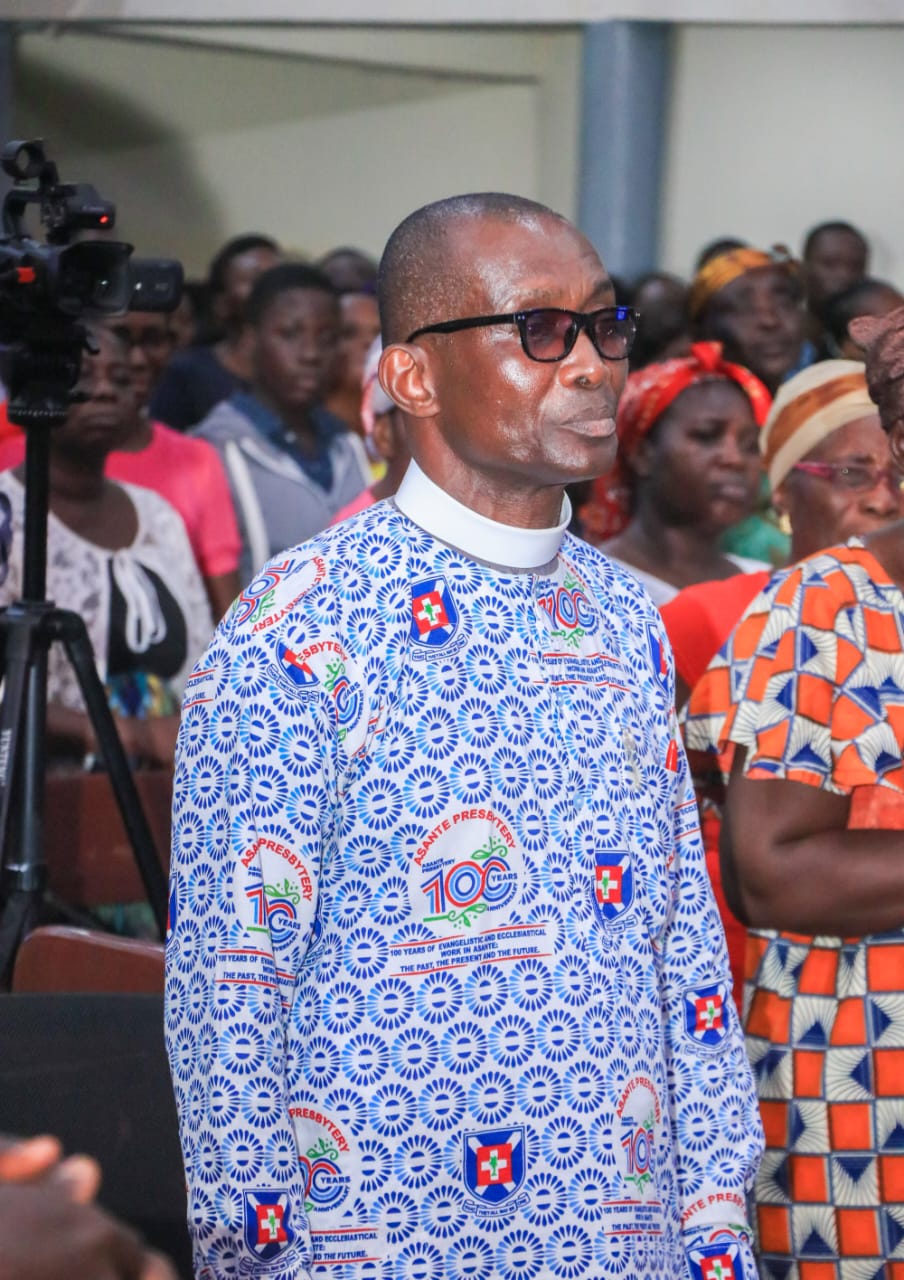
District Minister
Rev. Ernest Odame Asare
Welcome to the KNUST Christ Congregation, founded to serve the spiritual needs of the KNUST campus and the wider community. Christ Congregation is a part of the Presbyterian Church of Ghana.
The Christ Congregation, Presbyterian Church of Ghana, KNUST has adopted the vision of the Presbyterian Church of Ghana: "To be a Christ-Centred, Self-Sustaining and Growing Church."
Drawing inspiration from the Mission Statement of the Presbyterian Church of Ghana, "To uphold the Centrality of the Word of God and through the enablement of the Holy Spirit, pursue a holistic ministry, to bring all of creation to glorify God, the Christ Congregation, Presbyterian Church, KNUST exists to declare this Mission through:
Drawing inspiration from the Presbyterian Church of Ghana, the Christ Congregation is guided by the following unwavering principles:
The Christ Congregation, KNUST recognises the Bible as the primary source of the Word of God to guide its members in transforming their lives to the glory of God (Heb. 4:12-13). Members of Christ Congregation, KNUST, are taught to be committed to the Lordship of Jesus Christ and to obey God's will and commandments. The Church believes in God's divine leadership through Bible study and Fellowship with the Holy Spirit.
Christian discipline refers to the practice of following Christ's teachings and living a life that is pleasing to God. It involves consciously conforming one's thoughts, attitudes, and behaviours to Christ's character and the Bible's standards (2 Timothy 3:16-17, 1 Corinthians 9:24-27). Through its biblical teachings and administration, the Church trains members to uphold strong and sound moral standards in conformity to God's will in thought, purpose and action.
Members of Christ Congregation are called to work diligently and conscientiously daily. The Bible teaches us to be hardworking in our professions, interpersonal relationships, or other areas of responsibility as a way to honour God and fulfil His purpose for our lives (Colossians 3:23-24, Ecclesiastes 9:10). The Church is committed to encouraging members towards sacrificial, voluntary, and conscientious work. This principle is demonstrated in the endorsement of hard work at physical and spiritual levels.
Presbyterians must live with integrity, maintaining ethical standards and honouring moral principles in all areas of our lives. Integrity means being truthful in our words and actions, treating others with respect and fairness, and being accountable for our mistakes and shortcomings (1 Peter 3:16, Proverbs 10:9, 11:13). The Church considers this as very important since good character is vital to our calling and work of the follower of our Lord and Saviour, Jesus Christ.
Being Presbyterians, modesty, honour, and respect for others are the ways of the members of Christ Congregation. It involves serving and putting the needs of others before our own and being open to learning and growing in our faith (Philippians 2:3-4, Colossians 3:12). Being a cosmopolitan congregation; the Church instils the spirit of humility in the membership through the opportunity to serve that it provides its membership either at the committee level or leadership responsibility.
The motto of the Presbyterian Church of Ghana enjoins members of Christ Congregation to be united towards a common goal. Unity implies working together in harmony despite our differences to accomplish the Vision of the Church (Ephesians 4:3, 1 Corinthians 1:10). Being a community of members of different social and academic backgrounds, this Church instils the spirit of unity in the membership by committing to one purpose (theme) and goal at the generational group level and by other interest groups.
The Presbyterian Church upholds the value of a democratic system that allows members to express their views and vote on matters relating to the Church. It supports the rule of law and respect for human dignity and promotes dialogue among others (Mark 12:17, Romans 13:1-8). By these principles, the Church is concerned with the progress and prosperity of its members, the University governance, and the civil authorities. Hence, prayers are offered for members' participation in civil rights, university governance, and other administrative roles as their spiritual obligation.
Godly leadership focuses on serving others, while skills development involves acquiring knowledge and abilities that can be used to advance God's purposes in the world (Psalm 78:72). The Church, through many service opportunities, offers training for godly leadership and develops skills to serve the Church and society. For example, Bible reading, liturgy, song ministrations, group leadership, and serving on committees are how the Church builds its members' skills.
Moral principles guide the decisions and actions of members of the Congregation (2 Peter 1: 5-8, Romans 2:15). The Church is therefore committed to teachings on patience, love, forgiveness, and knowledge to build on the members' faith in Jesus Christ. These teachings will perfect the Church in the unity of the faith and the knowledge of the Son of God (Eph. 4:13).
The Christ Congregation is human-centred and strives to provide excellent social services to all who worship there and their families. The Congregation upholds the virtues of love, oneness, and Fellowship. It also encourages the virtues of love and mutual support for one another and works for unity and oneness among community members. It is committed to the Biblical principles of carrying each other's burden (Gal. 6.1). This includes help and support (spiritually and materially) for the members of the Congregation and their families. Mutual care and support are vital aspects of our service to God.
 In 1952, some members of the non-teaching staff of the University who were Presbyterians and Methodists started meeting for Sunday church service in their various homes on a rotational basis. In the early 1960s, when the number of worshippers increased, they moved into one of the classrooms at the Weweso Local Authority School (currently Weweso Metropolitan Assembly School). The Church was then known as the United Church, but most of the hymns sung were Presbyterian hymns, and the Service Order followed was mainly Presbyterian. The Church Services were conducted in the vernacular. The Catechist-in-Charge was Mr. S. Alema-Mensah, a Presbyterian.
Since the Church did not have a Minister, it relied on the services of Ministers from Ramseyer Congregation of the Presbyterian Church of Ghana, Adum, Kumasi, during Communion Services. Some of the Ministers were Rev. P. C. Richter, Rev. G. K. Sintim-Misa, Rev. E. M. L. Odjidja and Rev. H. O. Ansah, all Presbyterian Ministers. Rev. P. C. Richter and Rev. G. K. Sintim-Misa later became Protestant Chaplains of the University.
Rev. P. C. Richter officiated the first Joint Presbyterian/Methodist Church baptism on December 5, 1953. All communicants were issued Presbyterian Membership cards in which tithes and other entries were made.
In 1961, the Chaplain of the University, Rev. G. K. Sintim-Misa, decided to rename the United Church, which initially met at the Weweso School, as the UST Protestant Vernacular Church most probably to differentiate it from the Protestant Congregation, which met elsewhere on campus and conducted services in English.
 Later, the Church moved to the University Community Centre. After some time, the place was unsuitable for church services. The Methodists, amongst them, later moved out to join the Ayigya Methodist Church. The remaining Presbyterians appealed to the University authorities, specifically the then Vice-Chancellor, Dr. R. P. Baffour, to allocate a plot of land in the University to them to build a chapel. A plot of land opposite the Weweso School, which now hosts the BRRI flats, was allocated to them to build a chapel. The worshippers declined the offer because it was too close to the Kumasi-Accra highway, which posed a threat to their lives and those of their dependents.
The Congregation, therefore, sought permission from the authorities of the UST Primary School to worship in their Assembly Hall on Sundays. The Church service started there when Mrs. Agnes Opoku was the Headmistress.
While the Presbyterians worshipped at the UST Primary School, frantic efforts were made to start a Church building in the mid-1970s. The sod-cutting for the commencement of the Church building was done in 1976 during the tenure of Rev. D. B. O. Rockson. He was then a Methodist minister and the Protestant Chaplain of the University, while Prof. E. Bamfo Kwakye was the Vice Chancellor of UST.
Other Protestant Chaplains who were Presbyterians, including Rev. D. A. Koranteng (who later became Moderator of the Synod of PCG), Rev. Dr. Sam Prempeh (who later became Moderator of the Synod of PCG) and Rev. Dr. K. Effa-Ababio at various times, encouraged the Protestant to complete the Church building and start the Church Hall. Later, other Presbyterian Ministers who came to pastor the KNUST Presbyterian Church at various times, namely Rev. G. K. Acheampong, Rev. Kwadwo Owusu-Sarpong and Rev. J. H. Ofosuhene, also encouraged the Congregation to complete the Church building project.
In the mid-1990s, the Church members took a bold step to move into the new chapel even though it was not completed. The worshippers used palm fronds as covering over the chapel. It was a strategy adopted to spur the congregants to provide funds for the permanent roofing of the chapel. The roofing began on March 25, 1991, and was completed by April 4, 1991.
In 1993, the Church became a fully-fledged Presbyterian Church, and the first Presbyterian Session was constituted after elections were held in the new chapel. Since then, the Church has assumed a complete Presbyterian identity, and all its activities have followed the order of the Presbyterian Church of Ghana.
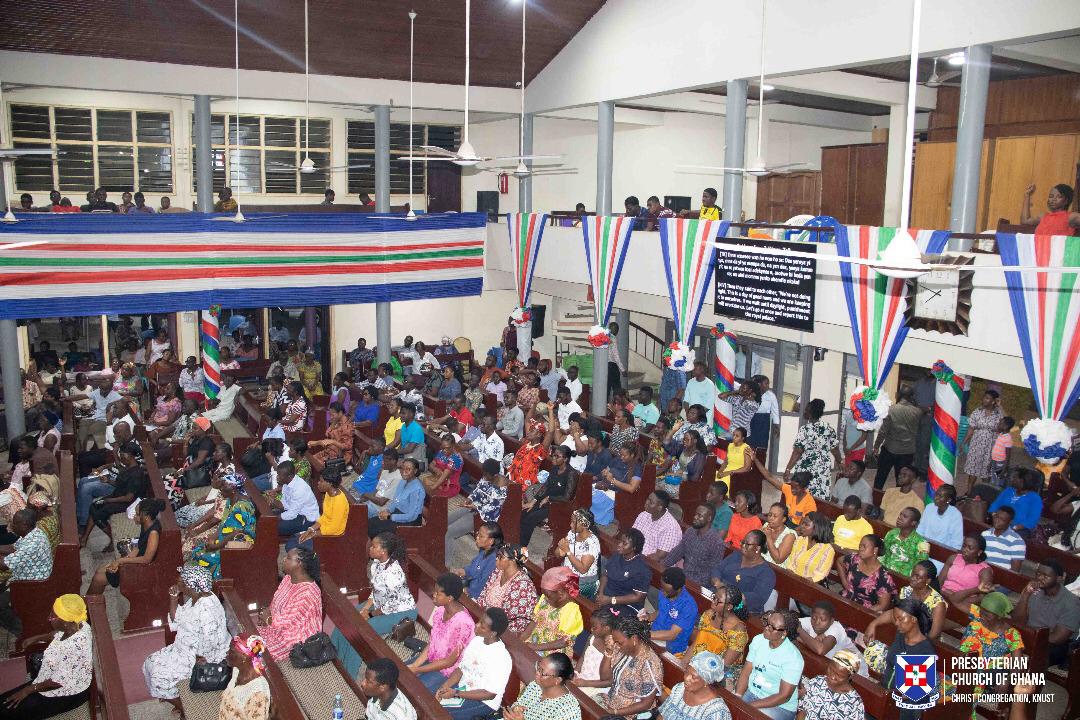 In 2008, the Church introduced the first Youth Service from 6:00 p.m. – 8:00 p.m. However, because of low patronage, it was abrogated.The Church introduced the English service scheduled for 7:00am to 9:00am in [YEAR]. In 2021, the Session re-introduced the Youth Service.
In August 2009, the Congregation named the Church "CHRIST CONGREGATION, KNUST, KUMASI". A special service officiated jointly by Rev. Dr. G. O. Lartey and Rev. Dr. Kwabena Opuni-Frimpong was held to commemorate the event.
On February 12, 2012, Christ Congregation, KNUST, which had been under Kumasi District for all this while, was elevated to a District status as TEK District in the Asante Presbytery, with Rev. Prof. Charles Ansah as the first acting District Minister. In August 2014, Rev. Herbert Anim-Opong was posted to the TEK District as the District Minister and Minister-in-Charge of Christ Congregation, KNUST.
On 23rd May 2015, a special prayer session was conducted to commence work on Church complex at Asokore Mampong. A stone laying and profiling was done at the project site. The prayer service was conducted by Rev. Prof. Charles Ansah, the acting Minister and the profiling team led by the project architect, Dr. Rexford Assasie Oppong. A preaching point was established at Asokore Mampong and officially commenced worship on 12th July 2015 in a temporary structure erected on site.
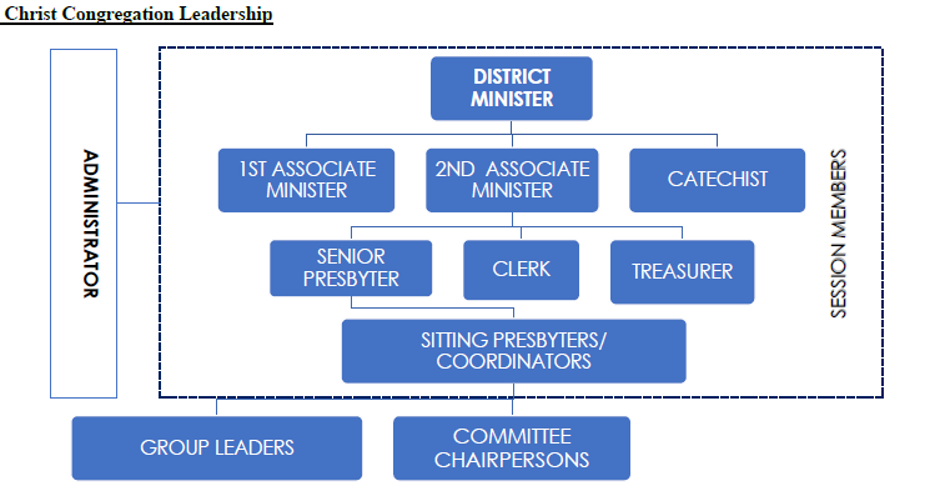
From the late 1960s, there was a conscious effort to form church groups whose activities would enhance the spiritual growth of members and service in the Church. The groups are as follows;
The first group formed in the Church was the Women's Fellowship in 1967, and it was inaugurated in 1968 with Mama Beatrice Yeboah, Beatrice Quarshie and Christiana Ababio as executive members. Mr. Joseph Okai Mensah assisted the group in teaching the Bible and songs.
The Church Choir was formed in 1968 by Mr. A. N. Yeboah and assisted by Mr. A. N. Lomotey, a dedicated Choirmaster. In November 1969, Rev. I. K. Asuamah-Thompson, the then Protestant Chaplain of KNUST, inaugurated the Choir. The numerical strength then was 52 (27 females and 25 males).
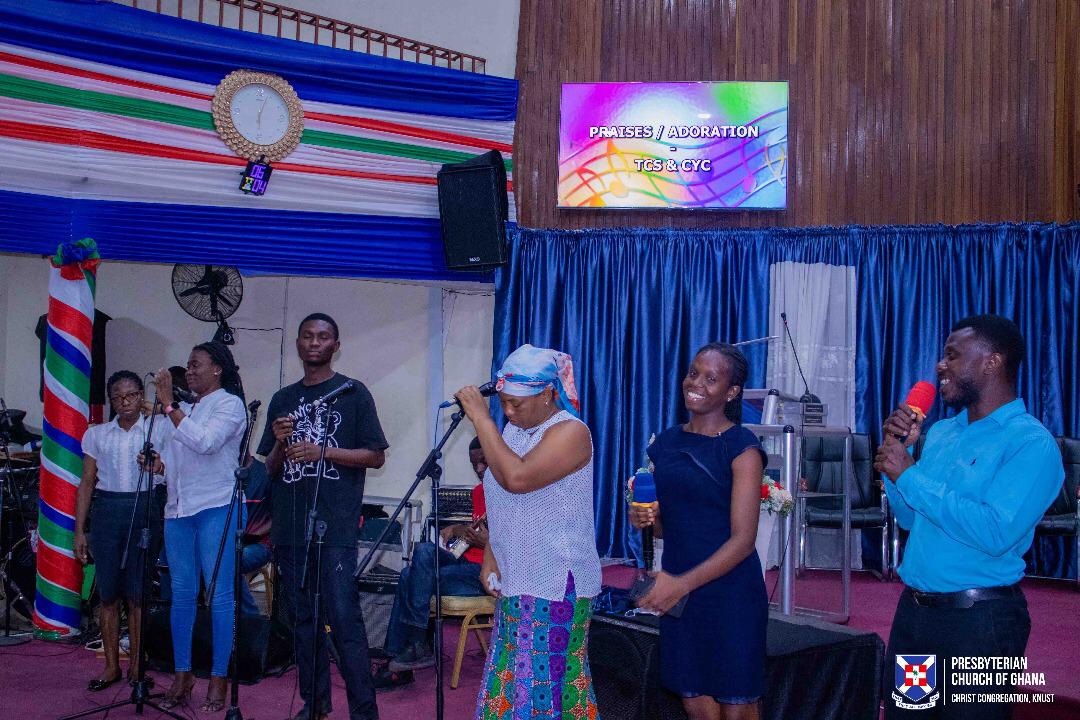
The Talented Christian Singers (TCS) is a singing group formed in 1976 by six young men in the Church, namely Messrs. G.O. Asiedu, E.O. Okine, E. A. Okine, Nai Mensah, Daniel K. Nortey and J. W. Fynn (now Catechist). The group aimed to join other singing groups in the Church in singing the local choruses to praise and worship God.
The Bible Study and Prayer Group (BSPG) was formed by Messrs. Victor S. Owusu, S. A. K. Kwakye, Godfred Oduro, and sisters Beatrice Frimpong and Sarah Okine in 1982. They met to study the Bible, pray for the Church, and spearhead evangelism. Individuals and the Church were generally motivated towards God's direction through prayer and Bible study to fulfil the Great Commission.
The Men's Fellowship was started by 12 members of the Church in 1983. The Fellowship was inaugurated in 1985 by the then Chaplain of KNUST and Minister-in-Charge of the Church, Rev. D. A. Koranteng (former Moderator).
The Young People's Guild (YPG) was started in the Church in 1983 through the efforts of Mr. Daniel Ampofo Ohene-Adu (now Prof.), assisted by other youth in the Church. It was inaugurated in March 1984 and later affiliated with the District, Presbytery and National Unions.
Young Adult Fellowship started in September 2007 with four interim executives and 50 members. The group was inaugurated in March 2008 with elected eight executives to lead the group. TEK District YAF was inaugurated on 16th February 2014.
In 1983, the Session approved the formation of an Adult Sunday School programme in the Church to assist in the spiritual growth of the members. Subsequently, Prof. Emmanuel Frimpong formed a fifteen (15) member team of Adult Sunday School Teachers.
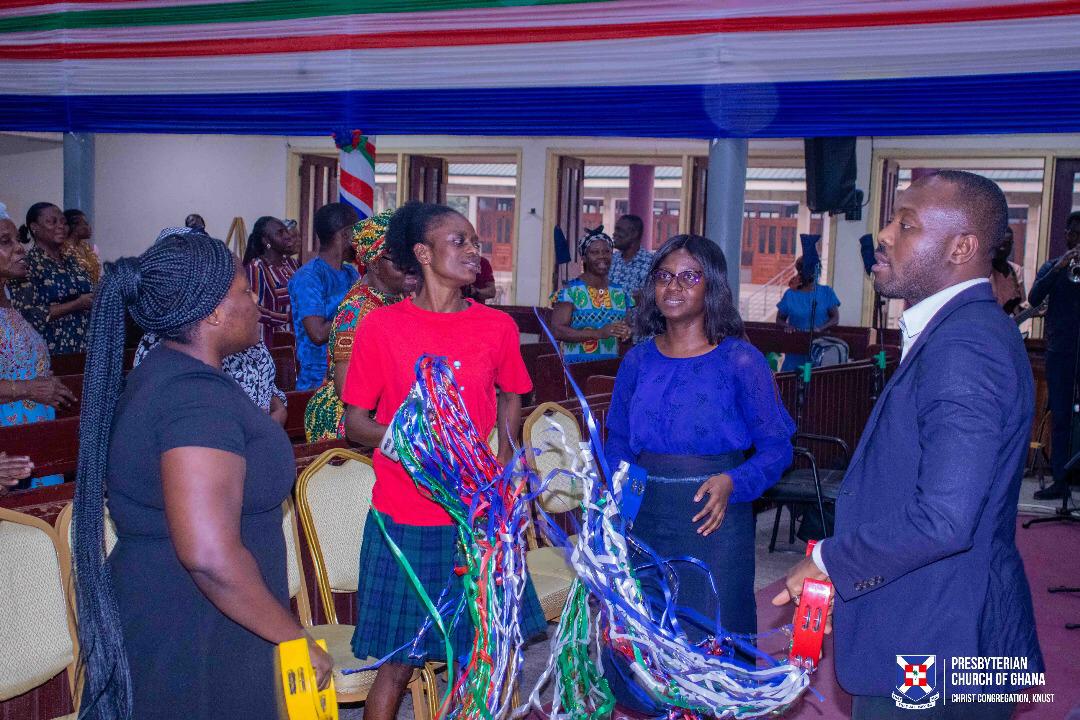
The Singing Band was formed on January 29, 1984, with 15 members and was inaugurated in June 1986 with twenty-six (26) members (20 women and six men).
The idea of establishing a Brigade in the Church was initiated by Mrs. Gloria Okine and Mr. Joseph W. Fynn in 1984. With the encouragement from the Very Rev. D. A. Koranteng, the then Chaplain of the University of Science and Technology, Kumasi and Minister in Charge of the Church, the first enrolment service was held on July 7, 1985, with five Boys Officers, twenty boys, Seven Girls Officers and thirty-three Girls.
The Children's Service was started in 1984 as an offshoot of the Boys' and Girls' Brigade with about twenty (20) children under the leadership of Messrs. J. W. Fynn, Hayford Okumkah, S. O. Larbi Jnr. and a few others who were members of the Church Choir. The child is recognised as the primary focus of the Ministry, and their salvation and balanced (holistic) nurture are the key focuses of the Ministry. This is consistent with how Jesus grew up, as stated in Luke 2:52: "And Jesus grew in wisdom and stature, and in favour with God and man".
The Junior Youth was established when the youth policy of the Church was fully implemented in the late 1980s to group children between the ages of 12 and 18 years together for effective teaching. The group started in 1990 under the direction of Dr. J. O. Darko, then president of YPG. In 1997, the Junior Youth began to worship on Sundays at the Technology Secondary School with Messrs Kwame A. Addow and Kwame Amoah as leaders.
The Christ Youth Choir started in 1996 during a Children's Day celebration when three friends – Rhoda Annoh-Acheampong, Dorcas Ohene Addae and Deborah Abayateye came to minister in songs. Later, at another Children's Day celebration, more children from the J.Y. group joined. The group became known as the Joyful Singers. It was inaugurated in 2009 as an independent group and named Christ Youth Choir (CYC).
It started in 1992 during the time of Rev. G.K. Acheampong (now Rev. Dr. G.K. Acheampong). Founding members include Seth Kwabena Adu Baah, Kwaku Gyasi Acheampong (now Rev. Kwaku Gyasi Acheampong), Bro. Nai Mensah, and Bro. Samuel Mensah Sowah.
This Committee started during the time of Rev. G. O. Lartey, who was then the Minister-In-Charge. The Session at the time constituted a 15-member committee chaired by Mrs. Mary Kusi to disciple new commers in the basics of Christian believes using a manual adopted from Hope Congregation, Sakumono. The committee was also responsible for the follow up of new members who joined the church.
Committees have been set up to ensure that the various aspects of the Church are attended to and well-coordinated. Members of the Congregation willingly contribute their time and skill to the administration of the Church by serving on these committees. The committees are:
ESR is to:
CLAN comprises Committees on Children's Ministry, Youth Ministry, Women's Ministry, Men's Ministry, Ministry to the Aged, Worship, Christian Education, Ministry, Training, Scholarship and Counselling.
CLAN is to:
This committee is under the Department of Social Services (DSS) responsible for committees on Health and Environment, Agriculture, and Small-Scale Technology.
The mandate of this Committee is to:
This Committee handles Accounts, Budgets, Projects and Investments.
The Finance committee has the following responsibilities:
The AHRM comprises Committees on Human Resources Management and Property Management. It is mandated to:
The ME comprises Committees on Evangelism and Specialized Ministries. It has the responsibility to:
The Committee on Education is vested with the responsibility to:
The mandate of this Committee is to:
The mandate of the Committee on Scholarship is to:
This Committee includes three main subgroups, i.e., the Career Guidance group, the Marriage Counsellors group and the Family Life group.
The Committee on Counselling and Family Life is to:
Rev. Ernest Odame Asare
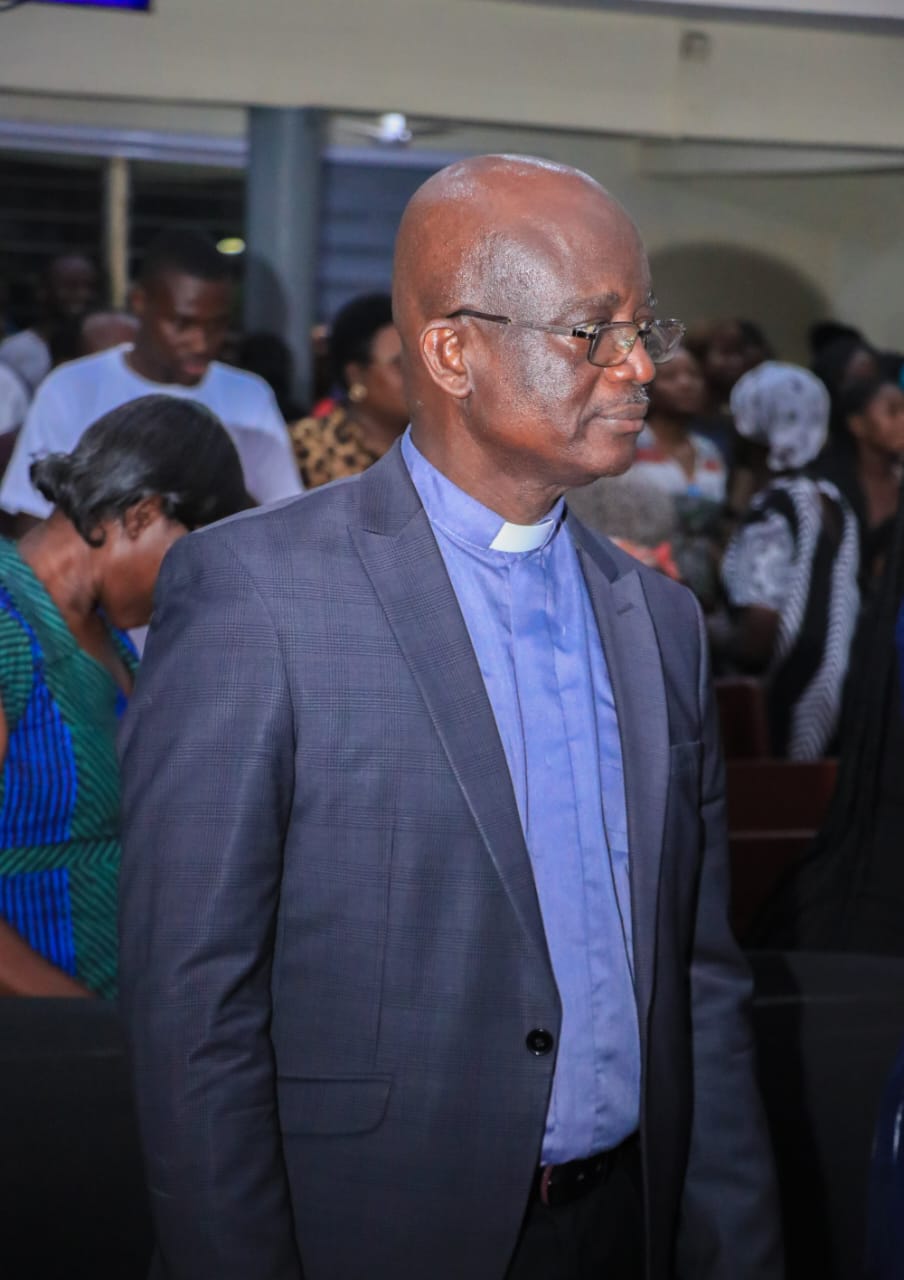
Rev. Prof. Charles Ansah
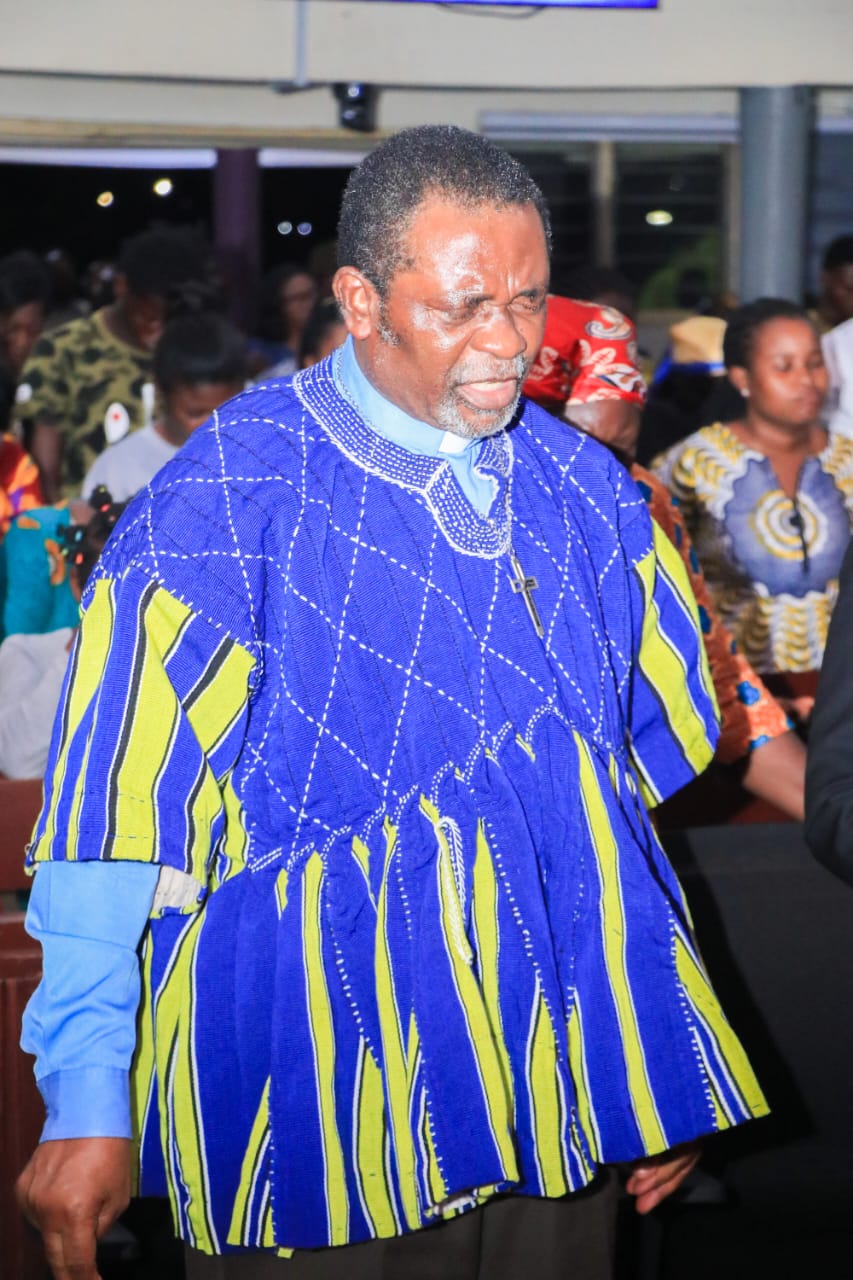
Rev. Prof. J. E. T. Kuwornu-Adjaottor
Catechist Joseph W. Fynn
Catechist Joseph W. Fynn
Catechist Joseph W. Fynn